Real Men Play in the Dirt Cute Laborers Review
As a designer who has spent years navigating the intersection of digital graphics and physical stitching, I approach every new asset with a critical eye. When I first encountered Real Men Play in the Dirt Cute Laborers, my initial reaction was one of amusement mixed with professional curiosity. This design sits comfortably within the Crafts category, but its potential extends far beyond simple clip art. It is a piece of Graphics that demands a specific type of application to truly shine. The concept is straightforward yet effective: a humorous take on manual labor that appeals to fathers, DIY enthusiasts, and anyone who finds joy in getting their hands dirty. However, translating this playful SVG file into a high-quality machine embroidery design requires careful planning.
The Visual Personality and Design Intent
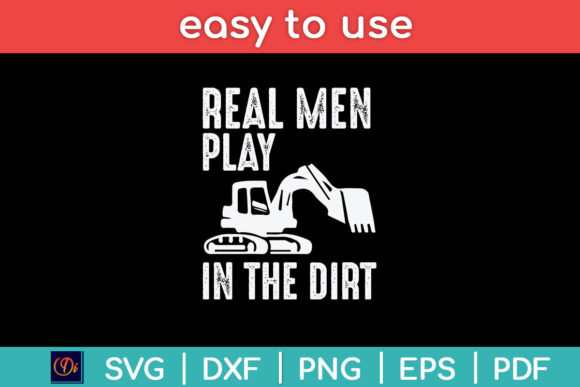
The mood created by Real Men Play in the Dirt Cute Laborers is lighthearted and relatable. The layout typically features bold lettering paired with illustrative elements representing construction or gardening tools. In a digital preview, the lines appear clean, which is promising for digitization. However, when I visualize this as a finished product, I am immediately thinking about how the shapes will hold up under the stress of a needle piercing fabric repeatedly. The "cute" aspect of the laborers suggests rounded edges and simplified forms, which are generally excellent for fill stitch areas. Sharp angles in small text can sometimes cause registration issues, so the overall aesthetic here leans toward a friendly, approachable style rather than a hyper-realistic technical drawing.
This design naturally belongs in projects that celebrate hobbies and hard work. It is not a formal logo; it is a conversation starter. For an Etsy seller or a boutique owner, this graphic offers a perfect opportunity to tap into the market for personalized gifts and novelty items. The visual personality is robust enough to stand out on a busy shelf at a craft fair, yet subtle enough to be a charming detail on a home decor item.
From Screen to Stitch: A Real-World Scenario
Let's walk through a practical scenario. Imagine you are preparing a custom embroidered sweatshirt for a client who works in landscaping. You have selected Real Men Play in the Dirt Cute Laborers as the central motif. Before you even load the machine, you must consider the placement. A chest pocket area might be too small if the design includes detailed tool illustrations. Instead, a full back print or a large front panel on a heavy cotton sweatshirt would provide the necessary canvas.
In this real-life situation, the success of the project hinges on how the stitch density interacts with the fabric texture. Sweatshirts often have a fleece backing that can distort intricate details if the stabilizer is insufficient. If you were to use this design on a tote bag design instead, the flat weave of the canvas would likely render the running stitch outlines much more crisply. The key is to ensure that the "dirt" elements—perhaps represented by splatter effects or earthy tones—are stitched with enough density to prevent the fabric from showing through, while maintaining the softness of the garment.
When I think about customer reactions, I anticipate a strong positive response. People love designs that acknowledge their passion or profession with a touch of humor. A father receiving a hat with this message, or a gardener getting a kitchen towel featuring the same theme, feels like a gift that understands them. This emotional connection is what drives sales for handmade products. However, that connection is only possible if the execution is flawless. A poorly stitched version of Real Men Play in the Dirt Cute Laborers could look messy and cheap, undermining the sentiment entirely.
Navigating Fabric Challenges and Placement
While the design is versatile, there are specific situations where caution is required. Using this embroidery file on stretchy fabrics like jersey knit requires a significant amount of stabilizer. Without it, the hoop tension can distort the cute laborer figures, making them look stretched or warped. Similarly, on dark fabrics, the contrast becomes critical. If the original graphic relies on light gray or beige for the "dirt" elements, those colors may disappear against a navy or black background unless you use a bright top layer or an applique design technique.
Curved surfaces, such as caps or hats, present another challenge. The text in Real Men Play in the Dirt Cute Laborers might need to be arched to follow the brim, which can alter the legibility of smaller words. If the design includes tiny lettering, it is best to avoid placing it on a curved surface where the thread tension varies across the curve. Additionally, dense stitch areas should be avoided on thin fabrics like tea towels or baby clothes, as the weight of the thread can make the material stiff and uncomfortable. For baby embroidery projects, you would need to simplify the design significantly, perhaps focusing only on the main icon and removing complex text.
Practical Designer Notes for Success
To ensure your project succeeds, I recommend following these practical steps before committing to a final run:
- Test on Scrap Fabric First: Never skip this step. Run Real Men Play in the Dirt Cute Laborers on a scrap piece of the actual fabric you intend to use. Check for puckering, skipped stitches, or thread breakage.
- Review Thread Color Contrast: Ensure the chosen thread colors pop against the background. A muddy brown on a tan shirt will fail to communicate the message.
- Confirm Hoop Size: Verify that the entire design fits within your machine's maximum hoop size. If it is too large, you may need to split the design, which can affect alignment.
- Inspect Small Details: Zoom in on the digital file to check for any lines that are too thin to be stitched effectively. These may need to be thickened during the digitizing process.
- Use Proper Stabilizer: Whether using cut-away for knits or tear-away for wovens, the right stabilizer is non-negotiable for maintaining the integrity of the finished product.
- Check Licensing: Since this is a digital asset, always confirm the licensing terms before selling finished items. Ensure you are allowed to use it for commercial embroidery projects.
Impact on Brand and Product Value
For a small shop product line or a craft business, consistency is key. Real Men Play in the Dirt Cute Laborers can serve as a signature piece if executed well. It adds a layer of professionalism and thoughtfulness to your offerings. Customers trust brands that pay attention to detail. When they see a well-stitched, vibrant design on a custom apparel item, they perceive higher value. Conversely, a sloppy execution can damage your reputation.
This design also enhances buyer engagement. In the world of digital product sellers, having a library of assets that translate well from screen to stitch is invaluable. If you offer mockups, ensure they show the design in various contexts—on a pillow cover, a cap, or a tote bag—to help customers visualize the potential. A good printable mockup can bridge the gap between the digital file and the physical reality, setting accurate expectations.
Ultimately, Real Men Play in the Dirt Cute Laborers is more than just a funny SVG. It is a versatile tool for creative entrepreneurs. By understanding its strengths and limitations, you can create memorable personalized gifts and profitable merchandise. Whether you are making a holiday gift for a friend or stocking shelves for your online store, the care you put into the digitization and stitching process will determine the final impact. Take the time to test, adjust, and refine, and you will find that this design is a reliable asset in your creative toolkit.